
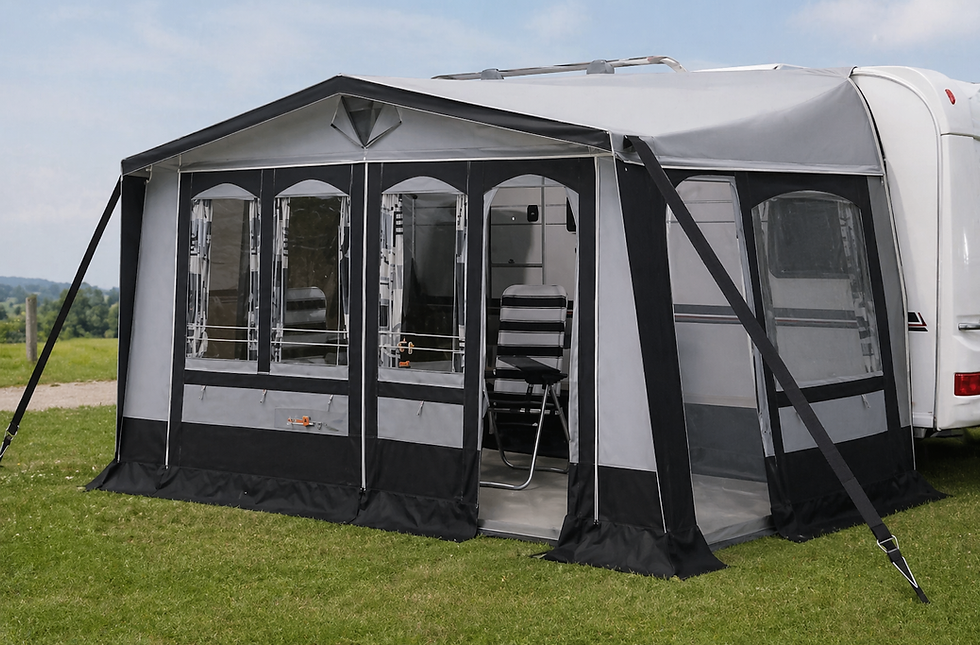




How to Prevent Condensation in a Caravan Awning (2026 UK Guide)

Updated: Apr 1

Condensation in a caravan awning can quickly turn a comfortable touring setup into a damp, dripping frustration — especially during UK spring and autumn trips.
If you’ve ever woken up to water droplets on the inside of your awning roof, soggy furniture, or damp carpets, you’re not alone.
Looking for the complete caravan awning setup and buying guide?
From choosing between air and poled awnings to setup tips, storm protection and seasonal advice, our Caravan Awnings UK – Complete Guide (2026) covers everything you need to know. It’s the perfect place to start whether you’re buying your first awning or upgrading your current setup.
In this 2026 guide, we’ll explain:
Why condensation happens
How to prevent it
The best awning accessories to reduce moisture
Seasonal pitch solutions
Long-term fixes
What Causes Condensation in a Caravan Awning?
Condensation forms when warm, moist air meets a cold surface.
Inside an awning this happens because:
You cook inside the awning
Wet coats and shoes are drying
People are breathing in an enclosed space
Night temperatures drop quickly
The inside of the awning roof becomes colder than the air inside — and moisture turns into water droplets.
PVC seasonal awnings are particularly prone to this because they are less breathable than lightweight touring awnings.
Is Condensation Worse in Air Awnings or Pole Awnings?
Both can suffer from condensation.
However:
Feature | Air Awning | Traditional Pole Awning |
Breathability | Moderate | Depends on fabric |
Insulation | Slightly better | Varies |
Condensation Risk | Medium | Medium–High |
Roof Liner Compatible | Yes | Yes |
Air awnings often use modern coated fabrics which can trap moisture if ventilation isn’t managed properly.
Brands like Outdoor Revolution and Camptech offer breathable touring materials — but ventilation is still essential.
10 Practical Ways to Prevent Condensation in a Caravan Awning
1️⃣ Increase Ventilation (Even in Cold Weather)
This is the most effective solution.
Keep at least one roof vent slightly open
Crack open opposite side windows
Use mesh panels where possible
Air circulation reduces trapped moisture.
Even 2–3cm opening makes a difference.
2️⃣ Install an Awning Roof Liner
A roof liner creates a thermal barrier between warm air and the cold awning roof.
Benefits:
Reduces dripping
Improves insulation
Makes the awning feel warmer
It’s one of the best upgrades for seasonal pitches.
3️⃣ Use a Small Dehumidifier
For longer stays:
12V caravan dehumidifier
Rechargeable moisture traps
Low-watt electric units
Place it centrally in the awning overnight.
This works particularly well on seasonal setups.
4️⃣ Avoid Cooking Inside the Awning
Cooking produces significant steam.
If you’re using a BBQ such as a Cadac grill:
Cook outside the awning when possible
Keep doors fully open if cooking inside
Steam is one of the biggest condensation triggers.
5️⃣ Don’t Dry Wet Clothes Inside
Wet coats, boots, dog towels — all release moisture.
If possible:
Use a porch area
Hang outside under canopy
Use a boot tray with airflow
6️⃣ Use Awning Carpets with Breathability
Solid ground sheets can trap moisture rising from the ground.
Instead:
Use breathable awning carpet
Avoid fully sealed plastic groundsheets in winter
This reduces ground-based damp.
7️⃣ Install Storm Straps Correctly
Loose fabric can create cold pockets.
Brands like Fiamma offer tensioning systems that keep awning fabric taut.
Tighter fabric = less temperature variation.
8️⃣ Open the Awning Each Morning
Make this part of your routine:
Fully unzip doors for 20–30 minutes
Let fresh air cycle through
Even in winter — short bursts work well.
9️⃣ Use Thermal Curtains Inside the Caravan
Warm air escaping from your caravan increases moisture build-up in the awning.
Use:
Thermal blinds
Close internal doors overnight
🔟 Choose the Right Awning for Your Usage
If you mainly do seasonal pitches:
Heavy-duty PVC awning
Roof liner
Permanent ventilation solution
If you tour frequently:
Lightweight breathable fabric
Quick-dry materials
Modular ventilation panels
Seasonal Pitch Condensation Strategy (UK Specific)
If you keep your caravan on a seasonal pitch:
Install roof liner permanently
Leave trickle vents open
Use a low-energy dehumidifier
Regularly check seals
Inspect for mould weekly
Condensation left untreated leads to:
Mould growth
Fabric deterioration
Musty smells
Frame corrosion
Prevention is far cheaper than replacement.
Common Mistakes That Make Condensation Worse
Sealing the awning completely shut
Blocking all vents
Using patio heaters inside
Drying washing indoors
Ignoring early signs of damp
Quick Condensation Prevention Checklist
✔ Ventilation always
✔ Roof liner installed
✔ Avoid cooking steam
✔ Morning airflow routine
✔ Dehumidifier for long stays
✔ Breathable flooring
Related Articles
FAQs – Preventing Caravan Awning Condensation
Why is my caravan awning dripping inside?
Dripping is caused by condensation forming when warm moist air meets a cold awning roof surface.
Does an awning roof liner stop condensation completely?
It significantly reduces dripping but works best when combined with ventilation.
Is condensation worse in winter?
Yes. Larger temperature differences between inside and outside increase moisture formation.
Can condensation damage my awning?
Over time it can cause mould, fabric breakdown, and frame corrosion.
Should I leave my awning vents open overnight?
Yes — small openings improve airflow and dramatically reduce moisture build-up.
Final Thoughts
Condensation in a caravan awning is common — but completely manageable.
With better airflow, thermal barriers, and smart setup habits, you can keep your awning dry, comfortable, and mould-free all season long.
For awning accessories, roof liners, ventilation kits, and seasonal pitch upgrades, explore the range at IDS Camping & Leisure.


Comments