




The Ultimate Autumn Motorhome & Campervan Checklist: 25 Things to Check Before Your Next Trip


Autumn is a fantastic time to explore the UK in a motorhome or campervan. Campsites are quieter, popular destinations are less crowded, and Britain’s countryside takes on spectacular shades of gold, copper and red.
However, autumn touring also brings colder nights, heavier rain, slippery roads and fewer daylight hours. Preparing your vehicle before leaving can make the difference between a cosy autumn escape and a wet, uncomfortable weekend.
This practical autumn motorhome and campervan checklist covers 25 important checks, from tyres and batteries to heating, ventilation and campsite equipment.
Why Is Autumn Motorhome Preparation Important?
A motorhome or campervan is both a vehicle and a living space. That means you need to prepare the mechanical side for wet roads and colder temperatures while also checking the habitation equipment that keeps you comfortable.
Good preparation can help you:
Identify vehicle problems before travelling
Reduce the chance of a flat battery
Stay warm during colder nights
Manage damp and condensation
Protect water systems from low temperatures
Set up safely on wet or muddy pitches
Avoid problems during darker arrivals
Tour more confidently in changing weather
Here are the checks we recommend completing before your next autumn trip.
Vehicle and Road-Safety Checks
1. Check the Engine Oil and Essential Fluids
Check the engine oil, coolant, brake fluid and windscreen-washer fluid in accordance with the vehicle manufacturer’s instructions.
Use a suitable screenwash mixture rather than plain water, particularly when colder overnight temperatures are possible.
If a warning light appears or you notice unexplained fluid loss, arrange an inspection before travelling.
2. Inspect the Tyres
Motorhomes can remain parked for long periods, so tyre condition deserves careful attention.
Check each tyre for:
Cracking
Cuts or bulges
Uneven wear
Embedded objects
Correct tread depth
Signs of deterioration around the sidewalls
Check the pressures when the tyres are cold, using figures appropriate for your vehicle, tyres and loaded condition. Do not automatically rely on a generic pressure found online.
Remember to inspect the spare wheel or tyre-repair equipment as well.
3. Test the Vehicle Battery
Cooler weather can expose a weak starter battery. If the engine turns over slowly or the battery repeatedly needs charging, have it tested before your trip.
Check that the terminals are clean and secure, and follow the manufacturer’s instructions when charging.
If your motorhome has been standing for several weeks, take it for a suitable drive or use an approved battery charger rather than simply running the engine briefly while parked.
4. Check the Brakes
Pay attention to unusual noises, vibration, pulling to one side or changes in braking performance.
Motorhomes are heavier than cars and may need greater stopping distances, especially on wet roads. Any concern about the braking system should be investigated by a competent mechanic before travelling.
5. Test All Exterior Lights
Shorter days make working vehicle lights essential.
Check:
Headlights
Daytime running lights
Indicators
Brake lights
Rear lights
Fog lights
Reversing lights
Number-plate lights
Side and high-level marker lights, where fitted
Clean dirty lenses and carry appropriate spare bulbs or fuses if they can be replaced by the user.
6. Inspect the Windscreen, Wipers and Mirrors
Replace wiper blades that smear, judder or leave sections of the windscreen uncleared.
Clean the windscreen thoroughly inside and out, and check for chips or cracks. Make sure mirrors and any reversing camera are clean and correctly positioned.
Autumn sun can sit low in the sky, so keep sunglasses somewhere accessible in the cab.
7. Check Your Breakdown Cover and Documents

Confirm that your breakdown cover includes the size and weight of your motorhome or campervan. Some standard policies have vehicle restrictions.
Carry or securely store access to:
Driving licence
Insurance details
Breakdown-cover information
MOT details
Vehicle handbook
Campsite bookings
Emergency contact numbers
If travelling outside the UK, check the current requirements for every country on your route.
Heating, Gas and Habitation Safety
8. Test the Habitation Heating
Run the fitted heating system before leaving home. Confirm that it starts correctly and that warm air reaches the expected outlets.
Check that external flues and internal vents are unobstructed. Never block permanent ventilation to make the vehicle feel warmer.
Heating and gas appliances should be maintained in accordance with the manufacturer’s schedule and serviced by an appropriately qualified professional.
9. Check the Gas Supply
Make sure you have sufficient gas for heating, cooking and hot water. Consumption can increase considerably during cooler trips.
Check that cylinders are upright and properly secured. Inspect accessible hoses for obvious deterioration without dismantling the system.
Never use a barbecue, outdoor camping stove or unapproved appliance to heat a motorhome, campervan or awning.

10. Test Smoke and Carbon Monoxide Alarms
Use the test button on every alarm and replace batteries where required. Check the replacement date printed on each unit.
Carbon monoxide cannot be seen or smelled. An alarm provides important protection, but it does not replace correct ventilation, appliance maintenance or professional servicing.
11. Inspect Fire-Safety Equipment
Check that your fire blanket and extinguisher are accessible and in serviceable condition.
Everyone travelling should know:
Where the equipment is stored
How to open the habitation door
Which windows or rooflights can serve as emergency exits
Where the vehicle keys are kept overnight
Keep exits and escape routes clear.
12. Check the Habitation Door, Windows and Rooflights
Open and close every window, rooflight and door. Inspect catches, hinges, seals and locking mechanisms.
Look for:
Cracked seals
Gaps or loose fittings
Water marks
Draughts
Stiff catches
Signs of previous leaks
Problems around windows and rooflights should be investigated before persistent autumn rain makes them worse.
Electrical and Battery Preparation
13. Check the Leisure Battery

Autumn touring often increases the demand on a leisure battery because lights, heating controls, pumps and device chargers are used more frequently.
Check:
State of charge
Secure mounting
Terminal condition
Signs of leakage, swelling or damage
Performance under normal load
Do not mix incompatible battery types or use a charger that is unsuitable for your battery technology.
14. Inspect the Electric Hook-Up Cable
Uncoil the hook-up cable fully and inspect its entire length.
Do not use it if you find:
Cuts or abrasions
Exposed wiring
Crushed sections
Burn marks
Loose connectors
Cracked plugs
On site, use the correct connection procedure specified by the campsite and vehicle manufacturer. Fully uncoil the lead and position it to minimise trip and vehicle-movement hazards.
For more information, read our motorhome electric hook-up guide.
15. Pack Torches and Backup Power
Delays can easily turn a planned daylight arrival into a dark campsite setup.
Carry:
A main torch
A head torch
Spare batteries
A rechargeable lantern
A charged power bank
Suitable charging cables
Keep at least one torch where it can be reached without unpacking the whole vehicle.
Damp, Condensation and Ventilation
16. Check for Damp or Water Ingress
Inspect around windows, rooflights, doors, service hatches and roof joints.
Warning signs include:
Musty smells
Water staining
Mould
Soft wall or floor areas
Discoloured panels
Persistent condensation
Damp cushions or mattresses
A professional habitation check can identify moisture that is not visible during a basic inspection.
17. Keep Permanent Ventilation Clear
Do not block floor vents, wall vents or other permanent ventilation points.
Even during cold weather, airflow is essential for safety and helps control moisture produced by breathing, cooking and wet clothing.
Use controllable windows and roof vents according to the vehicle manufacturer’s instructions, and air the living area each morning.
18. Prepare for Wet Clothing and Footwear
Motorhomes and campervans have limited living space, so wet equipment can quickly create condensation.
Bring:
An absorbent entrance mat
A boot tray
Microfibre towels
Waterproof storage bags
A collapsible laundry basket
Spare dry footwear
Hooks or storage suitable for wet coats
Avoid drying saturated clothing directly beside a heater or against soft furnishings.
Water, Waste and Cold-Weather Checks
19. Inspect the Fresh-Water System
Check the fresh-water tank, filler cap, hose, pump and visible connections.
If the system has been unused, clean and flush it according to the manufacturer’s recommendations. Use a clean, food-safe hose when filling the tank.
Only carry the amount of water you need for the journey. A full tank adds considerable weight and reduces your available payload.
20. Check the Grey-Waste System
Make sure the grey-water outlet is closed before travelling and that any external hose or container is clean and undamaged.
Use authorised disposal points and never release grey water onto a pitch, road or public parking area.
In colder weather, avoid leaving water standing unnecessarily in external pipes or containers.
21. Prepare for Low Overnight Temperatures
Early frost is possible during autumn, particularly in exposed or northern locations.
Check whether your fresh- and waste-water systems are:
Internal and heated
External and exposed
Insulated
Equipped with tank heaters
Protected by automatic dump valves
Follow the vehicle and heating-system manufacturer’s cold-weather instructions. If freezing conditions are forecast and your system is not protected, draining it may be necessary.
Loading and Campsite Setup
22. Check Your Vehicle Weight and Payload
Autumn equipment can add more weight than expected. Extra gas, warm clothing, wet-weather gear, outdoor mats and additional water all use valuable payload.
Secure heavy items low down and prevent objects from moving while driving.
Remember that the vehicle’s weight may include:
Passengers
Fuel
Fresh water
Gas cylinders
Food
Bicycles
Awnings
Outdoor furniture
Personal belongings
If you are uncertain, use a suitable weighbridge when the vehicle is loaded for travel.
23. Pack Levelling Ramps and Wheel Chocks
Wet autumn pitches may be uneven, soft or slippery. Pack levelling ramps appropriate for your vehicle’s weight, together with suitable wheel chocks.
Drive onto ramps slowly with assistance where practical. Never stand directly in front of or behind a moving motorhome.
Our motorhome campsite setup checklist explains the complete arrival routine.
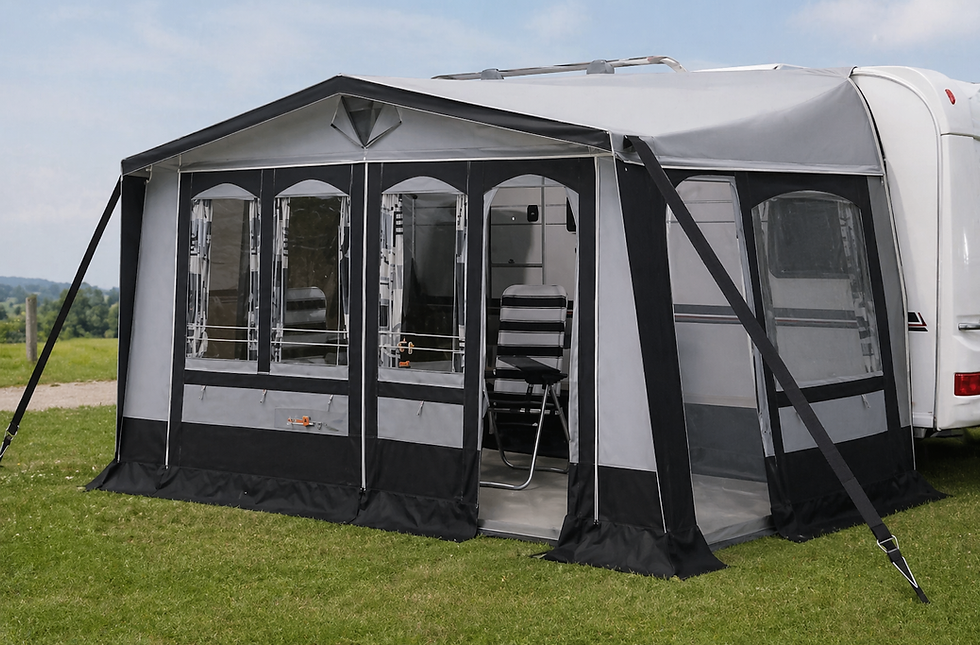
24. Inspect Your Awning and Outdoor Equipment
Before travelling, inspect any roll-out canopy, drive-away awning, windbreak, table and chairs.
Check:
Awning fabric and seams
Poles or air beams
Valves and pump
Pegs and guy lines
Canopy arms and fixings
Storm straps
Storage bags
Retract roll-out canopies whenever the vehicle is unattended or unsuitable weather is forecast. Lightweight awnings and canopies should not be relied upon in strong winds.
Dry wet fabric fully as soon as possible after returning home.
25. Check the Weather, Route and Overnight Stops
Review the forecast before setting off and continue checking it during your trip.
Look at:
Heavy-rain warnings
Wind speeds and gusts
Overnight temperatures
Flood alerts
Road closures
Low bridges
Narrow-road restrictions
Site or stopover access
Ground conditions
Seasonal facility closures
Motorhomes are taller, wider and heavier than most cars. Use navigation appropriate for your vehicle dimensions and never follow a sat-nav instruction that appears unsafe.
If severe wind, flooding or dangerous driving conditions are expected, adjust your route or delay the journey.
Quick Autumn Motorhome and Campervan Packing List
In addition to your normal equipment, consider packing:
Waterproof coats and trousers
Warm layered clothing
Spare dry footwear
Extra blankets
Torches and head torches
Spare batteries
Power bank
High-visibility jackets
First-aid kit
Fire blanket
Electric hook-up cable
Food-safe water hose
Levelling ramps
Wheel chocks
Entrance mat
Boot tray
Microfibre towels
Waterproof storage bags
Appropriate awning pegs
Spare bulbs and fuses
Windscreen de-icer and suitable screenwash
Basic tool kit
Breakdown details
Vehicle-height reminder
For a more extensive equipment list, see our 40 motorhome essentials for your first trip.
Autumn Motorhome and Campervan FAQs
Is autumn a good time for motorhome touring in the UK?
Yes. Roads, campsites and visitor attractions can be quieter than during the summer holidays. Prepare for colder nights, shorter days and more changeable weather.
How do I keep a campervan warm during autumn?
Use the vehicle’s approved heating system, pack suitable bedding and clothing, and manage draughts without blocking permanent ventilation. Have heating and gas appliances serviced according to the manufacturer’s recommendations.
How can I reduce condensation in a motorhome?
Keep permanent vents clear, use controlled ventilation, open a window or roof vent when cooking, avoid drying wet clothing in the living area and air the vehicle each morning.
Heating alone will not remove all the moisture being produced.
Should I travel with a full fresh-water tank?
Usually, only carry the amount needed for the journey and your planned stops. Water is heavy and reduces the remaining payload. Follow your vehicle manufacturer’s guidance because recommendations can vary between models.
Can I use a portable gas heater inside my campervan?
Only use appliances specifically approved for use inside your vehicle and follow their instructions exactly. Never use a barbecue, outdoor stove or unflued outdoor heater inside a motorhome, campervan or awning.
Do motorhomes need winter tyres in the UK?
Winter tyres are not generally compulsory throughout the UK, but suitable tyres in good condition are essential. If travelling abroad, check the current legal requirements for every country and region on your route.
Should I retract my motorhome canopy overnight?
Retract it whenever strong winds are possible, when leaving the vehicle unattended, or when directed by the manufacturer. Weather can change quickly during autumn.
Enjoy the Freedom of Autumn Touring
Autumn motorhome and campervan trips offer quieter destinations, colourful countryside and plenty of opportunities for spontaneous weekends away.
The key is to prepare both sides of your touring vehicle: the road vehicle that gets you there and the living space that keeps you comfortable.
Complete these checks before leaving, keep an eye on the weather and adapt your plans when conditions change. With a warm, dry and properly prepared vehicle, you can enjoy the best of autumn touring with confidence.
What is the one item you never leave behind on an autumn motorhome or campervan trip? Share your recommendation in the comments.
Explore practical equipment for your next trip at IDS Camping & Leisure.


Comments