




Keeping Your Caravan Fridge Cool in Summer: A Comprehensive Guide

Updated: Aug 17
Every summer, thousands of caravan and motorhome owners find that their fridge struggles to stay cold. Food warms up, drinks lose their chill, and the freezer may even begin to thaw. The good news is that in many cases, there's nothing actually wrong with the fridge itself. Absorption fridges work differently from household compressor fridges and rely heavily on good ventilation. When outside temperatures rise, they can lose efficiency if heat isn't able to escape properly.
In this guide, I'll explain the most common reasons why caravan and motorhome fridges stop cooling in hot weather, along with practical solutions to help keep your food safe and your holidays enjoyable.
Understanding Absorption Fridges
Unlike the compressor fridge in your kitchen, most caravan and motorhome fridges use absorption technology. Instead of a mechanical compressor, they use a combination of heat, refrigerant, and gravity to keep your food and drinks cold.
One of the biggest advantages of an absorption fridge is its flexibility. It can typically operate on 230V mains electricity when you're on a campsite, 12V while travelling, or LPG gas when you're off-grid. This makes it the ideal choice for touring caravans, motorhomes, and campervans.
The cooling process works by heating a sealed mixture of refrigerant and chemicals inside the fridge's cooling unit. As the refrigerant circulates through the system, it absorbs heat from inside the fridge cabinet, lowering the internal temperature. The heat removed from inside the fridge must then be released through the condenser coils located behind the fridge.
This is where ventilation becomes crucial. Cool air enters through the lower external vent, passes over the cooling unit, and naturally rises as it warms. The hot air then escapes through the upper vent, carrying excess heat away from the fridge. This continuous airflow allows the cooling system to operate efficiently.
When outside temperatures rise, or if airflow behind the fridge is restricted, the hot air can become trapped behind the appliance. As a result, the cooling unit cannot release heat effectively, causing the fridge to struggle to maintain a safe temperature. This is why absorption fridges often perform less efficiently during hot summer weather compared with compressor fridges.
Adding an extractor fan behind the upper vent helps remove this trapped hot air, improving airflow and allowing the cooling unit to work more efficiently. For many caravan and motorhome owners, it's one of the simplest and most effective upgrades for better fridge performance during the summer months.
Top Tip: Before assuming your fridge has developed a fault, check that both external vents are clean and unobstructed. Good airflow is essential for efficient cooling, especially when temperatures climb above 25°C.
1. Hot Air Can't Escape Behind the Fridge

One of the most common reasons a caravan or motorhome fridge struggles in hot weather is poor airflow behind the cooling unit. Absorption fridges rely on releasing heat through the condenser at the back of the fridge. Under normal conditions, cool air enters through the lower external vent, passes over the cooling system, warms up, and naturally rises before escaping through the upper vent.
On hot summer days, this natural airflow isn't always enough. Heat can build up behind the fridge, especially when the sun is shining directly on the side of your caravan or motorhome. As the hot air becomes trapped, the cooling unit cannot get rid of heat efficiently, making it much harder for the fridge to maintain a safe internal temperature.
You may notice signs such as:
Drinks taking much longer to cool.
Butter, milk, and other chilled food feeling warmer than usual.
The freezer compartment struggling to keep ice cream or freezer blocks frozen.
The fridge working perfectly in spring but struggling during a summer heatwave.
How to Fix It
The simplest and most effective solution is to improve airflow behind the fridge. A fridge extractor fan fitted behind the upper external vent actively removes the trapped hot air instead of relying solely on natural convection. By continuously drawing hot air out of the vent, cooler air is pulled in through the lower vent, helping the cooling unit operate much more efficiently.
Many caravan and motorhome owners notice:
Faster cooling after arriving on site.
More consistent fridge temperatures.
Better performance during hot weather.
Improved cooling when parked in direct sunlight.
While a fan won't turn an absorption fridge into a compressor fridge, it can make a noticeable difference when outside temperatures climb above 25°C.
Top Tip: Before fitting a fan, check that both fridge vents are clean and free from leaves, dust, cobwebs, or insect nests. Even a partially blocked vent can reduce airflow and affect cooling performance.
Solution
Improve airflow with an extractor fan mounted behind the upper fridge vent. DIY Caravan & Motorhome Fridge Fan Installation Guide
2. The Caravan Is Parked in Direct Sunlight

Where you park can have a surprisingly big impact on how well your fridge performs. If the side of your caravan or motorhome containing the fridge vents is exposed to direct sunlight for several hours, the surrounding bodywork and ventilation area can become extremely hot.
As the temperature behind the fridge rises, it becomes much harder for the cooling unit to release heat. Instead of expelling hot air through the upper vent, the fridge is trying to cool itself using air that's already been heated by the sun. The result is reduced cooling performance, particularly during the hottest part of the day. This is a common issue during UK heatwaves and when touring in warmer parts of Europe, where temperatures can regularly exceed 30°C.
How to Reduce the Effects of Direct Sunlight
While you can't control the weather, there are several simple steps you can take to help your fridge work more efficiently:
Park with the fridge side in the shade whenever possible.
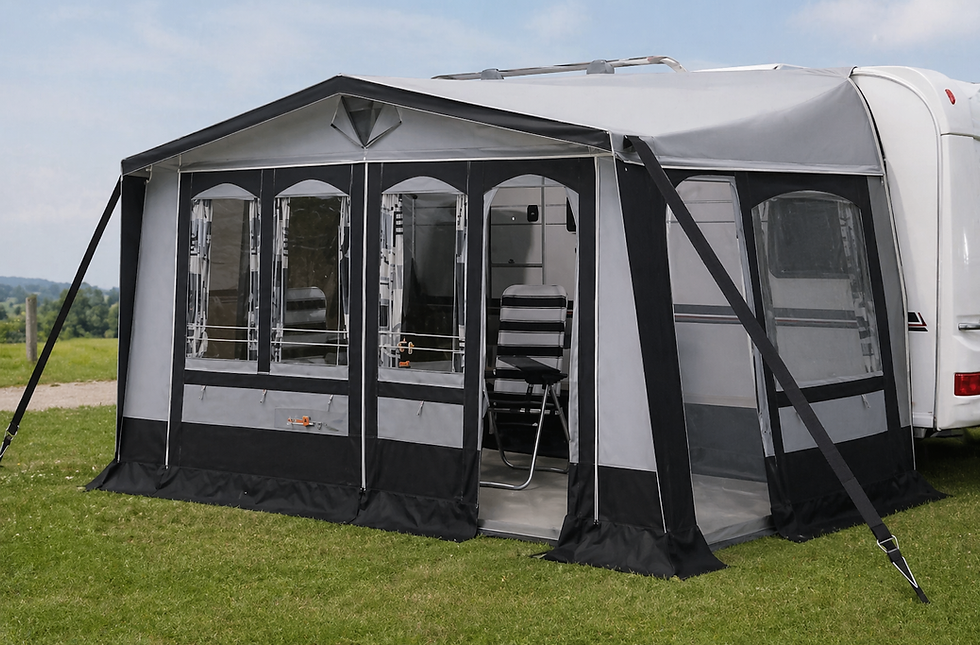
Use your awning to provide extra shade and reduce heat build-up on the side of the caravan or motorhome.
Avoid blocking the external fridge vents with furniture, windbreaks, or storage boxes.
Keep the area around the vents clear so hot air can escape freely.
Consider fitting an extractor fan behind the upper vent to actively remove trapped hot air during hot weather.
If you're staying on one pitch for several days, it's worth taking a few extra minutes to think about the position of the sun throughout the day. A pitch that seems ideal in the morning may leave your fridge side facing the full afternoon sun.
Top Tip: When booking a pitch, look for natural shade from trees or hedges where it's safe to do so. Even partial shade during the hottest hours of the day can help reduce heat build-up behind your fridge.
Don't Cover the Fridge Vents
It can be tempting to place a towel, reflective sheet, or other material over the fridge vents to keep the sun off them. However, this can actually make the problem worse by restricting the airflow that your absorption fridge relies on. Instead, focus on keeping the caravan or motorhome itself cooler while allowing plenty of fresh air to circulate through the lower vent and out of the upper vent.
3. Poor Ventilation Around the Fridge

Even if your caravan or motorhome is parked in the shade, your fridge still needs a constant supply of fresh air to operate efficiently. If the external vents become blocked or restricted, the cooling system can't release heat properly, causing the fridge to struggle—especially during warm weather.
Over time, it's common for dust, road grime, leaves, cobwebs, and even insect nests to build up behind the lower and upper vents. These obstructions reduce airflow and make it harder for hot air to escape from behind the fridge. In some cases, owners unintentionally block the vents themselves by placing chairs, storage boxes, awning skirts, or other equipment too close to the side of the caravan or motorhome.
Signs of Poor Ventilation
If airflow behind the fridge is restricted, you may notice:
The fridge takes much longer to cool after switching it on.
Food and drinks aren't as cold as expected.
The fridge performs well in cooler weather but struggles during summer.
The side wall around the upper vent feels extremely hot.
How to Improve Ventilation
Fortunately, improving airflow is quick and easy:
Remove both the upper and lower external fridge vents and inspect the area behind them.
Clear away leaves, dust, cobwebs, and any insect nests.
Check that no luggage, camping equipment, or awning accessories are blocking the vents from the outside.
Ensure the lower vent can draw in cool air freely and the upper vent has a clear path for hot air to escape.
Avoid storing items directly against the side of the caravan or motorhome where they may restrict airflow.
It's also worth making vent cleaning part of your annual caravan or motorhome service routine, particularly if your vehicle has been in storage over the winter.
Top Tip: If you remove the external vent covers before your first trip of the season, you'll often be surprised how much dust and debris has collected behind them. A quick clean only takes a few minutes and can help your fridge perform at its best.
4. The Fridge Wasn't Pre-Cooled

Unlike a household fridge, an absorption fridge takes much longer to reach its optimum temperature. If you switch it on just before setting off, it may still be cooling for several hours after you arrive at your campsite.
If your caravan or motorhome is parked at home before your trip, it's well worth pre-cooling the fridge 24 hours in advance using the mains electric hook-up (230V). This allows the cooling system to stabilise before you load your food and drinks.
Tips for Better Cooling
Turn the fridge on the day before you travel if your caravan or motorhome is parked at home.
Pre-chill food and drinks in your house fridge before loading them into the caravan.
Avoid putting warm groceries straight into the fridge.
Use freezer blocks or ice packs to help maintain a low temperature during the journey.
Once you've arrived on site, switch to the appropriate power source (230V or gas) as recommended by the fridge manufacturer.
Top Tip: If your caravan is stored at home with access to electricity, getting into the habit of turning the fridge on the evening before you leave can make a noticeable difference, especially during warm summer weather.
🚐 Caravan in Storage? If your caravan is stored away from home and you can't pre-cool the fridge, freeze a couple of freezer blocks overnight and place them inside just before travelling. Combined with pre-chilled food and drinks, they'll help keep the fridge cooler until you reach your destination and can switch the fridge on properly.
5. Opening the Door Too Often

Every time you open your caravan or motorhome fridge, warm outside air rushes in and the cold air escapes. While this isn't usually a problem in cooler weather, it can make a noticeable difference during hot summer days when your fridge is already working harder to stay cold.
Unlike a household compressor fridge, an absorption fridge cools more slowly. This means it takes longer to recover its temperature after the door has been opened, especially if the outside temperature is above 25°C.
It's easy to underestimate how often the fridge gets opened during a family holiday. Reaching for drinks, snacks, milk, or ingredients for meals all adds up, and each time the door opens, the cooling system has to remove that extra heat again.
How to Keep the Cold Air In
A few simple habits can make a big difference:
Decide what you need before opening the fridge.
Close the door as quickly as possible.
Store frequently used items, such as milk or drinks, near the front.
Keep drinks in a cool box during the day to reduce the number of times the fridge is opened.
Avoid standing with the door open while deciding what to eat.
If you're travelling with children, it can also help to keep snacks and bottled drinks in a separate cool bag or insulated box so they don't need to open the fridge every few minutes.
Keep the Fridge Full (But Don't Overfill It)
A reasonably full fridge actually stays colder for longer because chilled food and drinks help maintain the internal temperature. However, avoid overpacking the fridge, as air still needs to circulate around the shelves to cool everything evenly. A good balance is to stock the fridge with pre-chilled food while leaving enough space for air to move freely.
Top Tip: Freeze a few bottles of water before your holiday and use them as ice packs in the fridge. They'll help maintain a low temperature during your journey and provide cold drinking water once they've thawed.
Small Habits Make a Big Difference
Opening the fridge door isn't usually the main cause of poor cooling, but combined with hot weather, direct sunlight, and restricted airflow, it can make it much harder for your fridge to keep food at a safe temperature. By planning ahead and reducing how often the door is opened, you'll help your caravan or motorhome fridge recover more quickly and stay cooler throughout your holiday.
6. The Caravan Isn't Level

It might come as a surprise, but the way your caravan or motorhome is parked can have a direct effect on how well your fridge performs. Unlike a household compressor fridge, an absorption fridge relies on gravity to circulate the refrigerant through its sealed cooling system. If your caravan or motorhome is parked on a significant slope for long periods, the refrigerant may not flow as intended, reducing the fridge's ability to cool efficiently.
Even a slight lean is usually acceptable, but if your vehicle is noticeably out of level, you may find that the fridge takes much longer to cool or struggles to maintain a safe temperature.
How Level Is Level Enough?
As a general guide:
A slight slope is unlikely to cause any problems.
If you can comfortably notice the floor is sloping when you walk around, it's worth levelling the caravan or motorhome.
Always aim to park as level as possible, especially if you're staying on the same pitch for several days.
Most modern campsites have relatively level pitches, but it's still good practice to check your vehicle before settling in.
How to Level Your Caravan or Motorhome
Fortunately, levelling only takes a few minutes and can improve both comfort and fridge performance. You can use:
Caravan levelling ramps.
Motorhome levelling ramps.
Wheel levellers.
A small spirit level or built-in levelling indicator.
Many modern levelling ramps are lightweight, easy to store, and allow you to make quick adjustments when arriving on site.
Top Tip: Don't forget to check the caravan is level side-to-side and front-to-back. Levelling is important not only for your fridge but also for a comfortable night's sleep and proper operation of appliances such as shower trays and sinks.
Is This Really Causing the Problem?
If your caravan or motorhome is only slightly out of level, it's unlikely to be the sole reason your fridge isn't cooling. However, when combined with high temperatures, poor ventilation, and direct sunlight, even a small slope can reduce the efficiency of an absorption fridge. That's why it's worth checking the simple things first before assuming the fridge has developed a fault.
7. Running on the Wrong Power Source

Most caravan and motorhome absorption fridges can operate on 230V mains electricity, 12V battery power, or LPG gas. While all three power sources have their place, they are designed for different situations, and using the wrong one can affect your fridge's cooling performance. Understanding when to use each power source can help keep your food colder and reduce the risk of thinking there's a fault with the fridge when it's simply being used incorrectly.
230V Mains Electricity
When you're connected to an electric hook-up on a campsite, 230V is the ideal choice. It provides a constant supply of power, allowing the fridge to cool efficiently throughout your stay. If your caravan or motorhome is parked at home with access to mains electricity, switching the fridge on 24 hours before you leave is also an excellent way to pre-cool it before your holiday.
12V While Travelling
Many owners are surprised to learn that 12V isn't designed to cool a warm fridge quickly. Instead, its primary purpose is to maintain the temperature of an already cold fridge while you're driving. This is why it's so important to pre-cool the fridge before setting off and load it with chilled food and drinks. If you switch to 12V with a warm fridge full of room-temperature food, it's unlikely to reach a safe storage temperature during your journey.
LPG Gas When You're Off-Grid
When you're pitched without an electric hook-up, running the fridge on LPG gas is usually the most effective option. Absorption fridges are designed to operate very efficiently on gas and, in many cases, will cool just as well as they do on mains electricity. Always follow the manufacturer's instructions regarding the safe use of gas, particularly when travelling or refuelling your vehicle.
Which Power Source Should You Use?
As a general guide:
At home before your trip: 230V mains (if available).
While travelling: 12V to maintain an already cold fridge.
On a campsite with electric hook-up: 230V mains.
Off-grid or without electric hook-up: LPG gas.
Using the correct power source at the right time helps your absorption fridge perform at its best, especially during hot summer weather.
Top Tip: If your caravan is stored away from home and can't be pre-cooled on mains electricity, pack it with pre-chilled food and a couple of frozen freezer blocks before you leave. This helps keep the contents cooler until the fridge is running on 230V or LPG at your destination.
It's Not Always the Power Source
If you're using the correct power source and your fridge still isn't cooling properly, the problem may be caused by poor ventilation, direct sunlight, or trapped hot air behind the fridge rather than the fridge itself.
👉 Our DIY Caravan & Motorhome Fridge Fan Installation Guide shows how improving airflow behind the upper vent can help your fridge perform more efficiently during hot weather.
8. The Outside Temperature Is Simply Too High

Sometimes, there's nothing wrong with your caravan or motorhome fridge at all. When temperatures climb into the high 20s or above 30°C, even a perfectly functioning absorption fridge can struggle to maintain the same cooling performance as it does during cooler weather. This is because an absorption fridge works by removing heat from inside the cabinet and releasing it through the cooling unit at the back. As the outside temperature increases, it becomes much harder for the fridge to get rid of that heat efficiently.
In simple terms, the hotter it is outside, the harder your fridge has to work.
What Can You Expect?
During very hot weather, you may notice:
The fridge takes longer to reach its operating temperature.
Drinks aren't quite as cold as usual.
The freezer compartment softens slightly during the hottest part of the day.
The fridge cycles for longer as it works harder to maintain its temperature.
This doesn't necessarily mean your fridge has developed a fault—it may simply be operating within the limits of absorption cooling technology.
How to Help Your Fridge in Extreme Heat
While you can't lower the outside temperature, you can help your fridge perform more efficiently by:
Parking in the shade whenever possible.
Using an awning to reduce direct sunlight on the fridge side of the vehicle.
Pre-cooling the fridge before your trip.
Loading only pre-chilled food and drinks.
Keeping the door closed as much as possible.
Making sure the external vents are clean and unobstructed.
Improving airflow behind the fridge with an extractor fan.
Each of these small improvements helps reduce the workload on the cooling system, allowing it to perform more effectively during hot weather.
A Fridge Fan Can Make a Noticeable Difference
Although a fridge fan can't reduce the outside temperature, it can help the cooling unit remove heat more efficiently. By actively extracting hot air from behind the upper vent, the fan improves airflow through the cooling system, particularly on warm, still days when natural ventilation is less effective. Many caravan and motorhome owners find that this results in:
Faster cooling after arriving on site.
More stable fridge temperatures.
Better performance during summer touring.
Less temperature fluctuation throughout the day.
Top Tip: If temperatures are forecast to exceed 30°C, don't wait until your fridge starts struggling. Park in the shade where possible, pre-cool the fridge before travelling, and use good ventilation from the moment you arrive on site.
Remember: Absorption Fridges Have Their Limits
Absorption fridges are designed for touring and off-grid use, offering the flexibility of running on 230V, 12V, and LPG gas. While they perform exceptionally well in most conditions, they aren't designed to cool as aggressively as a domestic compressor fridge during extreme heat. The good news is that by combining good ventilation, correct levelling, sensible loading, and improved airflow, you can significantly improve performance and keep your food safely chilled throughout the summer.
👉 If your fridge regularly struggles in warm weather, our DIY Caravan & Motorhome Fridge Fan Installation Guide shows how a simple extractor fan upgrade can help improve cooling performance during your next trip.
9. Signs Your Fridge May Need Professional Attention

Most caravan and motorhome fridge cooling problems can be traced back to poor ventilation, high outside temperatures, incorrect levelling, or using the wrong power source. However, if you've worked through the checks in this guide and your fridge still isn't cooling properly, it may indicate a fault that requires professional diagnosis. Knowing the warning signs can help you decide whether it's time to book a service rather than continuing to troubleshoot the problem yourself.
Warning Signs of a Fault
If you notice any of the following, your fridge may need professional attention:
The fridge doesn't cool on 230V, 12V, or LPG gas.
The freezer compartment also fails to get cold.
You can smell a strong ammonia odour around the fridge.
There is a yellow or green powdery residue on the cooling unit behind the fridge.
The gas burner won't stay lit or repeatedly goes out.
Your fridge displays an error code that doesn't clear after following the manufacturer's instructions.
The fridge suddenly stops cooling after previously working normally.
Don't Ignore an Ammonia Smell
One of the clearest signs of a cooling unit failure is a strong ammonia smell or the appearance of a yellow or green residue behind the fridge. These can indicate that the sealed cooling system has developed a leak. Unfortunately, this isn't a DIY repair, and the fridge should be inspected by a qualified technician before being used again.
When Was Your Fridge Last Serviced?
Like many appliances in a caravan or motorhome, your fridge benefits from regular servicing. Routine maintenance may include:
Cleaning the burner assembly (on gas models).
Checking ventilation and airflow.
Inspecting the flue for blockages.
Testing gas pressure and flame quality.
Checking electrical connections.
Inspecting door seals for damage or gaps.
A routine service can often identify small problems before they affect cooling performance during your holiday.
Rule Out the Simple Things First
Before assuming the fridge has developed a fault, check that you have:
✔️ Pre-cooled the fridge before travelling.
✔️ Parked the caravan or motorhome as level as possible.
✔️ Cleared both external fridge vents.
✔️ Loaded only pre-chilled food and drinks.
✔️ Selected the correct power source.
✔️ Improved airflow behind the fridge.
Many owners discover that one of these simple checks solves the problem without the need for expensive repairs.
Top Tip: If your fridge performs well in spring and autumn but only struggles during hot summer weather, the issue is much more likely to be related to ventilation or heat build-up than a mechanical fault.
Final Thoughts
Absorption fridges are incredibly reliable when they're installed correctly and given the conditions they need to work efficiently. Most cooling problems during the summer are caused by heat, airflow, and operating conditions, not by a failed fridge. If you've worked through the tips in this guide and your fridge still isn't keeping food at a safe temperature, it's worth arranging a professional inspection before your next trip.
👉 If poor airflow is the cause, our DIY Caravan & Motorhome Fridge Fan Installation Guide shows how a simple extractor fan can improve ventilation and help your fridge perform at its best during warm weather.
Related Guides
Caravan Fridge Temperature Guide (future article)
How Caravan Fridge Ventilation Works (future article)
FAQs
Why does my caravan fridge stop cooling in hot weather?
Absorption fridges become less efficient as outside temperatures rise because they rely on releasing heat through the cooling unit behind the fridge. Improving ventilation, parking in the shade, and fitting an extractor fan can all help improve cooling performance.
Why is my motorhome fridge warm even though it's switched on?
Check that you're using the correct power source, the vehicle is level, the external vents are clear, and the fridge has been pre-cooled before use. Hot weather and poor airflow are two of the most common causes.
Does a caravan fridge fan really work?
A fridge fan won't make an absorption fridge as powerful as a domestic compressor fridge, but it can improve airflow behind the cooling unit. Many owners notice better cooling performance, particularly during warm summer weather.
Should I run my caravan fridge on gas or electric?
When you're on a campsite with an electric hook-up, 230V mains is usually the most convenient option. If you're off-grid, LPG gas provides excellent cooling performance. While travelling, 12V is designed to maintain the temperature of an already cold fridge rather than cool it from warm.
Can I leave my caravan fridge on while travelling?
Many modern caravans and motorhomes automatically switch the fridge to 12V while towing or driving. Always follow your vehicle and fridge manufacturer's guidance regarding safe operation.
How cold should a caravan fridge be?
For safe food storage, the fridge should ideally operate at 4°C or below, while the freezer compartment should remain at approximately -18°C.
Can I improve my fridge without replacing it?
In many cases, yes. Cleaning the vents, parking in the shade, levelling the vehicle, pre-cooling the fridge, and improving airflow with an extractor fan can all make a noticeable difference without replacing the appliance.


Comments