




Best Awnings for Seasonal Caravan Pitches (2026 UK Buyer’s Guide)

If your caravan stays on a seasonal pitch for months at a time, choosing the right awning is critical.
A touring awning that’s perfect for weekend breaks may not survive a full UK season of:
Coastal winds
Heavy rainfall
Temperature swings
UV exposure
Prolonged tension
This 2026 UK guide explains:
Which awning types are best for seasonal use
Air vs poled comparison
Fabric strength explained
What to look for before buying
Seasonal awning setup tips
If you’re new to seasonal pitching, read our full guide here:
👉 Internal link: The Ultimate Guide to Seasonal Caravan Pitches (2026 UK Guide)
What Makes an Awning Suitable for Seasonal Use?
Not all awnings are built the same.
For seasonal pitches, you need:
✔ Strong frame system
✔ High-denier fabric
✔ Reinforced pegging points
✔ Storm strap compatibility
✔ Reliable roof tension
Seasonal pitching is about durability, not speed of setup.
Air Awnings vs Poled Awnings for Seasonal Pitches
Air Awnings (Inflatable)
Pros:
Quick setup
Even tension distribution
Fewer rigid stress points
Cons:
Beam failure risk (rare but possible)
May require re-inflation checks
Some models not designed for long-term pitching
Best for:
Semi-seasonal users
Sheltered pitches
Users prioritising ease
Poled Awnings (Steel Frame)
Pros:
Maximum rigidity
Strong in prolonged wind
Proven long-term durability
Excellent for exposed sites
Cons:
Longer setup time
Heavier
Best for:
Full seasonal pitches
Exposed coastal locations
Winter pitching
For high-wind areas, poled awnings often provide superior structural stability.
👉 Internal link: How to Secure a Caravan Awning in High Winds (2026)
Fabric Strength Matters (More Than Most Realise)
Look for:
600D+ polyester
Seasonal-rated materials
UV-resistant coating
Waterproof ratings above 3000mm
Thicker fabric reduces:
Stretching
Ballooning
Premature wear
Budget fabrics struggle in seasonal conditions.
Seasonal Awning Features to Look For
Reinforced Roof Panels
Prevents sagging and pooling.
Multiple Roof Support Poles
Essential for long-term stability.
Storm Strap Attachment Points
Critical for UK weather.
Full-Length Draught Skirt
Reduces wind penetration.
Zip-Out Panels
Allow surface area reduction during storms.
Recommended Seasonal Awning Types
)
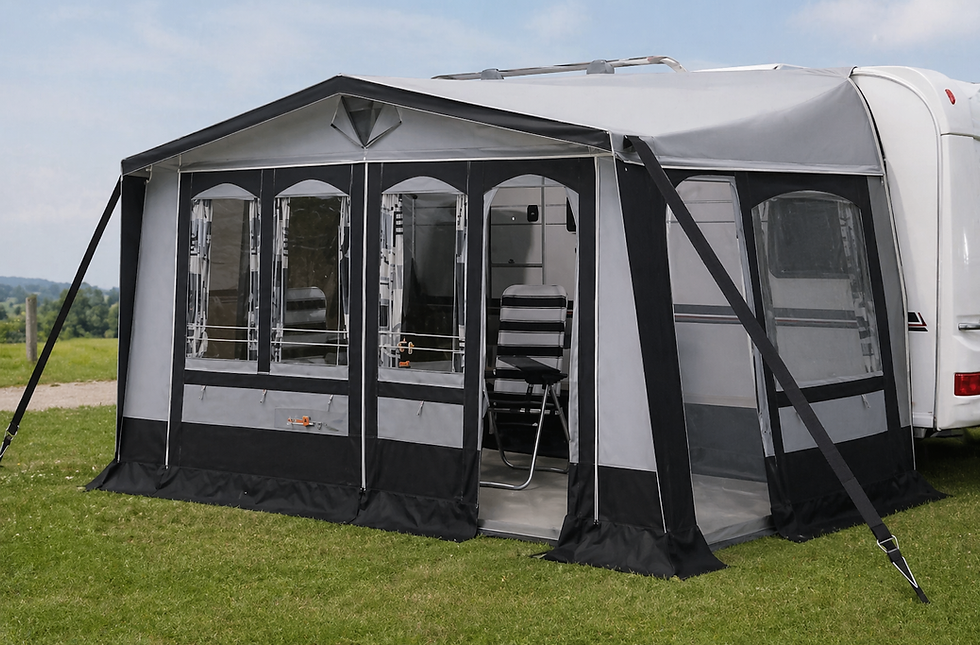
Heavy-Duty Poled Seasonal Awnings
Ideal for exposed pitches and long-term stability.
✔ Steel frame
✔ Reinforced fabric
✔ Storm strap compatible
Seasonal-Rated Air Awnings
For easier setup with strong structural support.
✔ Multi-point inflation
✔ Reinforced beams
✔ Seasonal pitching compatible
Porch Awnings for Semi-Seasonal Use
If you’re not fully seasonal, a porch awning may be sufficient.
✔ Smaller footprint
✔ Reduced wind surface
✔ Easier storm management
What Size Awning Is Best for a Seasonal Pitch?
Larger isn’t always better.
Bigger awnings:
Catch more wind
Require more support
Need stronger anchoring
For exposed pitches, slightly smaller, stronger setups often outperform oversized models.
Common Seasonal Awning Buying Mistakes
❌ Choosing based on price alone
❌ Ignoring wind exposure
❌ Not checking compatibility
❌ Skipping storm protection
❌ Buying touring-rated instead of seasonal-rated
Seasonal pitching requires long-term thinking.
How to Increase Awning Lifespan on a Seasonal Pitch
Use storm straps at all times
Re-tension monthly
Clean lower panels regularly
Remove in extreme storms
Inspect pegs after heavy rain
👉 Internal link: Seasonal Caravan Maintenance Checklist (2026)
FAQs
Are air awnings suitable for seasonal pitches?
Yes — if rated for seasonal use and properly secured with storm straps.
Are poled awnings better in high winds?
Steel-framed poled awnings generally offer superior long-term rigidity.
Can I leave my awning up all year?
Only if it is designed and rated for seasonal use and regularly maintained.
Do seasonal awnings need special insurance?
Check your insurer’s policy wording — some require notification.
What is the best awning for coastal sites?
Heavy-duty poled awnings with reinforced fabric are often best for exposed coastal locations.


Comments