




How to Secure a Caravan Awning in High Winds (2026 UK Guide)

Updated: Apr 1

High winds are one of the biggest risks to seasonal caravan setups in the UK.
A poorly secured awning can:
Tear fabric
Bend poles
Damage your caravan rail
Cause insurance claims
Affect neighbouring pitches
If your caravan is on a seasonal pitch, proper wind protection isn’t optional — it’s essential.
This 2026 UK guide explains exactly how to secure your caravan awning in high winds and protect your investment.
Why High Winds Are a Major Risk on Seasonal Pitches
Unlike touring setups, seasonal awnings:
Stay erected for months
Face repeated storms
Experience fabric fatigue
Endure constant tension
UK coastal and exposed sites are particularly vulnerable.
Step 1: Use Proper Storm Straps (Not Just Guy Lines)
Standard guy lines are not enough for strong winds.
Storm straps:
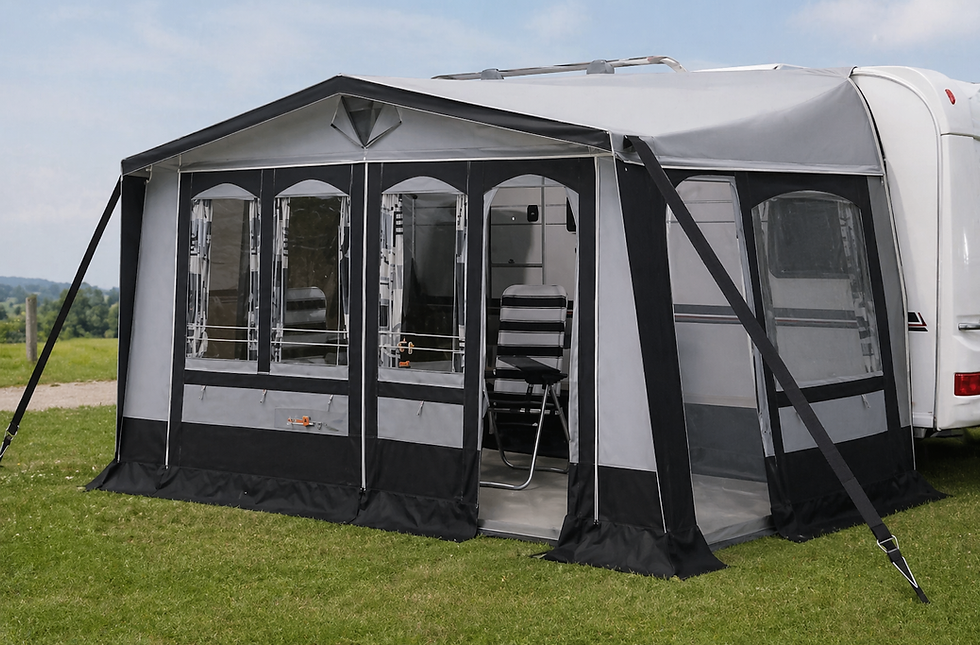
Run over the roof of the awning
Anchor securely to the ground
Reduce fabric lift
Prevent pole stress
They distribute pressure evenly across the structure.
🛒 Product integration: Heavy-duty storm strap kits
Step 2: Upgrade Your Pegs for Seasonal Use
Basic pegs supplied with awnings are rarely suitable for long-term UK pitching.
Consider:
Screw pegs
Heavy-duty rock pegs
Ground anchor systems
Different ground types require different anchoring.
If you’re on hardstanding, specialised pegs are essential.
Step 3: Re-Tension Regularly
Fabric loosens over time due to:
Temperature changes
Rain absorption
Natural stretching
Loose fabric acts like a sail.
Before storms:
Tighten straps
Check pole alignment
Inspect guy line tension
Read our Seasonal Caravan Maintenance checklist
Step 4: Add Extra Roof Support Poles
For seasonal use, adding additional roof support poles:
Reduces sagging
Improves rain runoff
Minimises wind lift
Extends fabric lifespan
Particularly important for larger awnings.
Step 5: Lower Panels in Extreme Weather
If severe winds are forecast:
Remove removable panels
Take down side extensions
Reduce surface area
Less surface area = less wind pressure.
Step 6: Use Windbreaks Strategically
Windbreaks aren’t just for privacy.
Positioned correctly, they:
Reduce wind force hitting your awning
Protect entrance areas
Create airflow control
Avoid fully sealing off airflow — controlled airflow is better than trapped wind.
Step 7: Know When to Take the Awning Down
Even seasonal-rated awnings have limits.
If 50–60mph winds are forecast, removal may be safer.
Signs your awning is under stress:
Fabric flapping loudly
Pole bending
Peg movement
Excessive roof ballooning
Common High Wind Mistakes
Relying only on supplied pegs
Not checking tension after rain
Ignoring weather warnings
Leaving awning skirts loose
Skipping post-storm inspections
Best Products for High Wind Protection
Heavy Duty Storm Strap Kits
Designed for seasonal caravan stability.
Screw Peg Anchor Systems
Ideal for hardstanding or firm ground.
Extra Roof Support Poles
Improve strength in exposed locations.
Windbreak Panels
Create controlled wind reduction.
Related Articles
FAQs
How strong does wind need to be to damage an awning?
Damage risk increases significantly above 30–40mph, especially if fabric is loose.
Are storm straps really necessary?
Yes — particularly for seasonal caravans. They dramatically reduce lift.
Should I remove my awning in winter?
If your awning is not rated for seasonal use or severe weather, removal is recommended.
Can insurance refuse a claim if I didn’t use storm protection?
Possibly — always check your policy conditions.
Do air awnings handle wind better than poled?
Both can be secure if properly tensioned and anchored. Setup quality matters more than type.
👉 Follow us on Facebook for inspiration and travel guides


Comments