




25 Questions to Ask Before Buying a Used Campervan

Updated: Jun 30

What Questions Should You Ask Before Buying a Used Campervan or Van Conversion?
Buying a campervan is one of the most exciting purchases you’ll ever make, but it’s also one of the easiest to get wrong if you don’t know what to look for.
Whether you’re buying from a dealer or privately, asking the right questions can help you avoid hidden problems, unexpected repair bills and costly disappointments.
In this guide, we’ll cover the essential questions to ask before handing over your money, along with practical tips on what to inspect yourself.
Dealer v Private Seller
Feature | Buying from a Dealer | Buying Privately |
Price | Usually higher | Usually cheaper |
Consumer Rights | Protected under the Consumer Rights Act | Very limited protection – generally “buyer beware” |
Warranty | Often 3–12 months included | Rarely included |
Finance Available | Usually yes | Usually no |
Part Exchange | Often accepted | Not available |
Vehicle Preparation | Usually serviced and cleaned | Varies greatly |
Habitation Check | May be included | Often not included |
Vehicle History | Usually well documented | Depends on the owner |
Negotiating Price | Sometimes limited | Often more flexible |
Peace of Mind | Generally higher | Depends entirely on the seller |
🚩 15 Red Flags – Walk Away Immediately
🚩 Red Flag | Why It Matters |
Strong damp smell | Could indicate expensive water ingress |
Seller won’t let you inspect the roof | May be hiding damage |
No service history | Maintenance may have been neglected |
VIN numbers don’t match | Potential legal issue |
Outstanding finance | Vehicle could be repossessed |
Fresh sealant everywhere | Could be hiding leaks |
Engine already warm when you arrive | May be hiding cold-start issues |
Appliances “can’t be tested today” | They may not work |
Excessive rust underneath | Costly structural repairs |
Pressure to buy immediately | Often a warning sign |
Water stains around rooflights | Likely leak |
Different paint shades | Previous accident repairs |
Warning lights on dashboard | Mechanical or electrical faults |
No V5C registration document | Ownership concerns |
Seller refuses a test drive | Walk away |

1. Why Are They Selling It?
This simple question often reveals a lot.
Perfectly reasonable answers include:
They’ve upgraded.
They’re no longer travelling.
Lifestyle changes.
Lack of storage.
Be cautious if the seller seems evasive or their story keeps changing.
2. Is It a Professional Conversion?
Ask whether the conversion was:
Factory built
Professionally converted
Self-built (DIY)
There’s nothing wrong with a DIY conversion, but ask for evidence of electrical work, gas installations and photographs showing how the conversion was completed.
3. Does It Have a Full Service History?
Regular servicing shows the vehicle has been cared for.
Ask for:
Service book
Receipts
MOT history
Major repairs
Timing belt replacement (if applicable)
4. Has It Ever Had Water Leaks?
Water ingress is one of the biggest causes of expensive repairs.
Check carefully for:
Soft walls
Stained ceilings
Damp smells
Bubbling wall coverings
Swollen furniture
Don’t be afraid to spend several minutes checking every cupboard.
5. Has It Been Weighed?
Many campervans are close to their maximum legal weight.
Ask:
Current weight
Payload remaining
Has any extra equipment been added?
Solar panels, bike racks, tow bars and additional batteries all reduce payload.
6. Does Everything Work?
Ask the seller to demonstrate:
Fridge
Heating
Water pump
Hot water
Hob
Grill
Lights
USB sockets
Mains hook-up
Leisure battery charging
If possible, arrive early so the fridge starts from cold.
7. How Old Is the Leisure Battery?
A leisure battery typically lasts around 5–7 years depending on use.
Ask:
Age
Type (AGM, Gel or Lithium)
Last replacement date
8. Is the Gas System Safe?
Request:
Recent habitation check
Gas safety certificate (if available)
Inspect hoses and regulators for signs of age.
9. Has the Roof Been Inspected?
Look for:
Cracked sealant
Loose rooflights
Solar panel fixings
Satellite dishes
TV aerials
10. Check Every Window
Open every:
Window
Rooflight
Flyscreen
Blind
Replacement windows can be surprisingly expensive.
11. Test Every Cupboard
Loose catches and worn hinges are common.
Open and close everything.
If it rattles on the driveway, it’ll rattle even more on holiday.
You may also enjoy our guide on Stopping Motorhome Rattles, which explains simple ways to make travelling quieter.
12. Take It for a Proper Drive
Drive on:
Town roads
Country roads
Dual carriageways
Check for:
Steering vibration
Clutch slipping
Brake pulling
Suspension noises
Engine warning lights
13. Ask About Tyres
Even tyres with plenty of tread may need replacing if they’re old.
Check:
Date codes
Cracks
Uneven wear
14. What Accessories Are Included?
Some sellers include:
Hook-up cable
Water hose
Levelling ramps
Toilet chemicals
Wheel chocks
Drive away awning
Outdoor furniture
Replacing these can cost hundreds of pounds.
15. Can You See the Vehicle Cold?
Ask the seller not to warm it up before you arrive.
A cold start often reveals:
Battery issues
Smoke
Engine noises
Starting problems
16. Does It Have an Awning Rail?
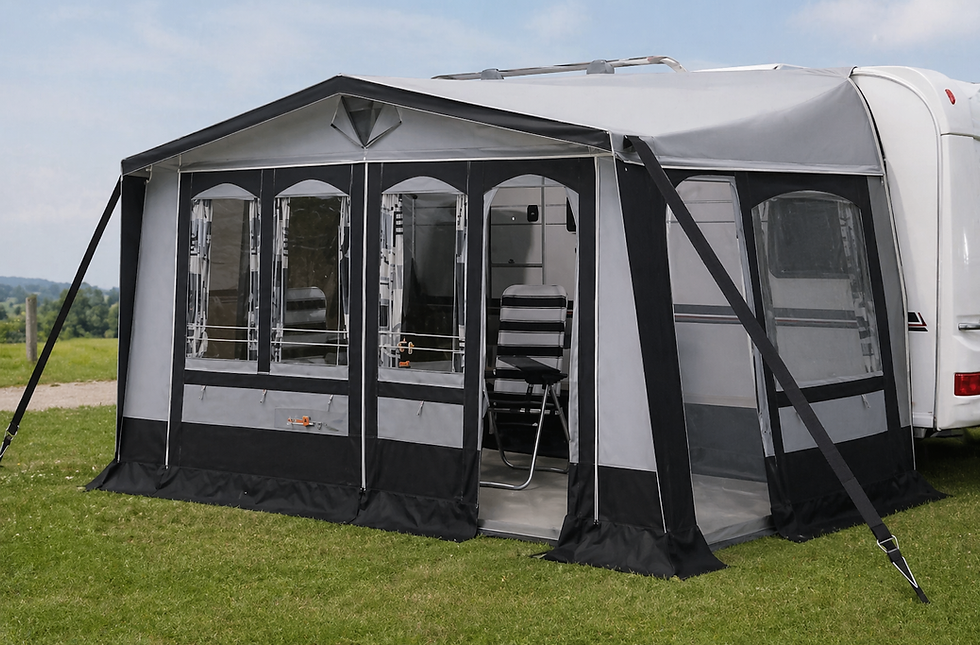
If you’re planning to use a drive away awning, it’s worth checking whether the campervan already has an awning rail fitted.
Many campervans come with an awning rail or wind-out canopy, but some don’t. If there’s no suitable attachment point, you’ll need to factor in the cost of fitting one or purchasing an alternative attachment system, such as a magnetic or strap kit.
If the campervan already has an awning, ask the seller:
Is the awning included in the sale?
How old is it?
Has it ever been repaired?
Are all the poles, pegs and accessories present?
Has it been packed away dry?
Does it fit this campervan correctly?
If possible, ask the seller to set up the awning during the viewing. This gives you the opportunity to check for:
Tears or holes in the fabric
Broken zips
Damaged air tubes or poles
Missing guy lines or pegs
Signs of mould or mildew
Smooth operation of any roll-out canopy
Replacing a damaged awning can cost hundreds, or even thousands, of pounds, so it’s well worth taking the time to inspect it properly.
If the campervan doesn’t include an awning, don’t worry. Many modern drive away awnings can be fitted using a variety of attachment methods, including awning rails, wind-out canopies, magnetic kits and webbing straps.
Replacing a damaged awning can cost hundreds, or even thousands, of pounds, so it’s well worth taking the time to inspect it properly.
If the campervan doesn’t include an awning, don’t worry. Many modern drive away awnings can be fitted using a variety of attachment methods, including awning rails, wind-out canopies, magnetic kits and webbing straps.
Related reading: Drive Away Awning Buying Guide – Learn how to choose the correct awning, measure your campervan and select the right attachment method before you buy.
Questions Worth Asking the Seller
How long have you owned it?
Where has it been stored?
Has it ever leaked?
Has it ever been in an accident?
Are there any faults?
When was it last serviced?
When was the timing belt replaced?
Have you travelled abroad in it?
Why are you selling?
Is there any finance outstanding?
What Should You Take to the Viewing?
Taking a few simple items with you can make it much easier to spot problems that might otherwise go unnoticed. Here’s what we recommend:
🔦 Torch
Many issues are hidden in dark cupboards, under seats, inside lockers and beneath the vehicle.
Use a torch to inspect:
Under the chassis for rust or damage
Storage lockers
Engine bay
Under beds and seating
Around the leisure battery compartment
Inside wardrobes and overhead cupboards
A bright LED torch is ideal.
🧻 Kitchen Roll
A roll of kitchen paper is surprisingly useful when viewing a campervan.
Use it to:
Wipe away condensation to check for damp stains
Check for water leaks around taps and pipework
Dry your hands after testing the water system
Spot oil or coolant leaks in the engine bay
Clean surfaces so you can inspect them properly
🚗 Tyre Pressure Gauge
Although many sellers will have inflated the tyres before a viewing, checking the pressures yourself can reveal whether the vehicle has been maintained properly.
While you’re there, also inspect:
Tread depth
Sidewall cracks
Uneven wear
Remember, campervan tyres can age before they wear out, so older tyres may still need replacing even if they have plenty of tread left.
📱 Phone Charger or Power Bank
You’ll probably spend an hour or more inspecting the campervan.
A fully charged phone allows you to:
Take plenty of photographs
Record videos of any faults
Check MOT history online
Verify service records
Compare prices with similar campervans
Use a notes app to record observations
A portable power bank is useful if you’re viewing several vehicles in one day.
📝 Notepad (or Notes App)
It’s surprising how quickly you forget the details when you’ve viewed more than one campervan.
Make notes on:
Good points
Faults found
Repairs needed
Accessories included
Questions to ask later
Estimated repair costs
If you’re comparing several vehicles, giving each one a simple score out of 10 can make the final decision much easier.
💧 Moisture Meter (Optional)
These inexpensive devices can help identify hidden damp before it becomes a costly repair.
Pay particular attention to:
Around rooflights
Window frames
Door surrounds
Bathroom walls
Floor edges
Corners of overhead lockers
Under beds and seating
While a moisture meter isn’t foolproof, unusually high readings may indicate water ingress and should prompt further investigation.
Top Tip: Always ask the seller before using a moisture meter inside the vehicle. Most genuine sellers won’t mind, and it’s a reasonable part of inspecting a used campervan.
I also think it’s worth adding one more item to the list:
🔌 16A Hook-Up Lead (Optional)
If you’re viewing a campervan at a dealership or a seller’s home with an external hook-up point, ask if you can connect the campervan to mains electricity. This allows you to check that the onboard charger, mains sockets and other 230V appliances are working correctly. While not essential for every viewing, it’s a useful extra check if the opportunity is available.
Essential Accessories for Your First Trip
Once you’ve found the right campervan, you’ll need a few essentials before heading off on your first adventure.
Some of the most useful items include wheel chocks, levelling ramps, hook-up leads, fresh water hoses and drive away awning accessories.
If you’re planning longer trips, don’t miss our guide to the Best Sat Nav Apps for Caravans and Motorhomes, which explains how to avoid low bridges, narrow roads and unsuitable routes.
You may also find these guides useful:
Final Thoughts
Buying a used campervan doesn’t have to be stressful. By asking the right questions and taking your time during the viewing, you’ll greatly reduce the risk of expensive surprises and find a vehicle that’s ready for years of adventures.
Remember, if something doesn’t feel right, don’t be afraid to walk away. Another campervan will always come along.


Comments