




Top 10 Tips for Buying a Second-Hand Caravan in the UK (2026 Guide)


Buying a used caravan can be one of the best ways to start caravanning without the cost of a brand-new model. Many used caravans offer excellent value for money, allowing you to enjoy holidays across the UK and Europe for a fraction of the cost of buying new.
However, not all used caravans are equal. Hidden damp problems, poor maintenance, missing paperwork, and expensive repairs can quickly turn a bargain into a costly mistake.
This guide explains the top ten things to check before buying a second-hand caravan, helping you make a confident purchase and avoid common pitfalls. If you’re new to caravanning, our Caravan Beginners Guide is a great place to start.
1. Set a Realistic Budget
Before you start viewing caravans, decide on a realistic budget.
Remember that the purchase price is only part of the cost. You’ll also need to consider:
Insurance
Servicing
Storage
Towing mirrors
Water and waste equipment
Caravan accessories
Maintenance and repairs
It can be tempting to spend your entire budget on the caravan itself, but leaving money aside for essential equipment and unexpected repairs is always sensible.
2. Check the Caravan for Damp

Damp is one of the most expensive problems to repair in a caravan and should be one of your first checks.
Common areas where damp can develop include:
Around windows
Rooflights
Front and rear panels
Awning rails
Locker doors
Bathroom corners
Look for:
Soft wallboards
Discolouration
Bubbling wallpaper
Musty smells
Staining around seals
If possible, ask to see recent damp reports or use a moisture meter during your inspection.
A professional caravan damp inspection can save you thousands of pounds in repair costs. Learn more about how damp reports work in our What Is a Caravan Damp Report? guide and discover what caravan damp readings actually mean.
3. Check the Service History
A well-maintained caravan should have a record of regular servicing.
Ask to see:
Annual service records
Damp reports
Appliance servicing records
Repair invoices
Warranty paperwork where applicable
A complete service history shows the caravan has been cared for and often increases resale value.
4. Inspect the Exterior Carefully

Walk around the caravan slowly and inspect every panel.
Check for:
Dents and damage
Cracks in panels
Delamination
Missing trim
Damaged seals
Signs of previous repairs
Pay particular attention to roof joints and awning rails, as these can be common water ingress points.
Don’t forget to inspect underneath the caravan for signs of corrosion or impact damage.
5. Examine the Chassis and Hitch
The chassis forms the foundation of the caravan.
Inspect:
Chassis rails
Corner steadies
Jockey wheel
Coupling head
Breakaway cable
Electrical connections
Look for excessive rust, bent components, or signs of poor maintenance.
If the caravan is fitted with an AL-KO stabiliser, check the condition of the friction pads and ensure the stabiliser handle operates correctly. Our guide on how to check AL-KO stabiliser friction pads explains what to look for and when replacement is required.
6. Check the Tyre
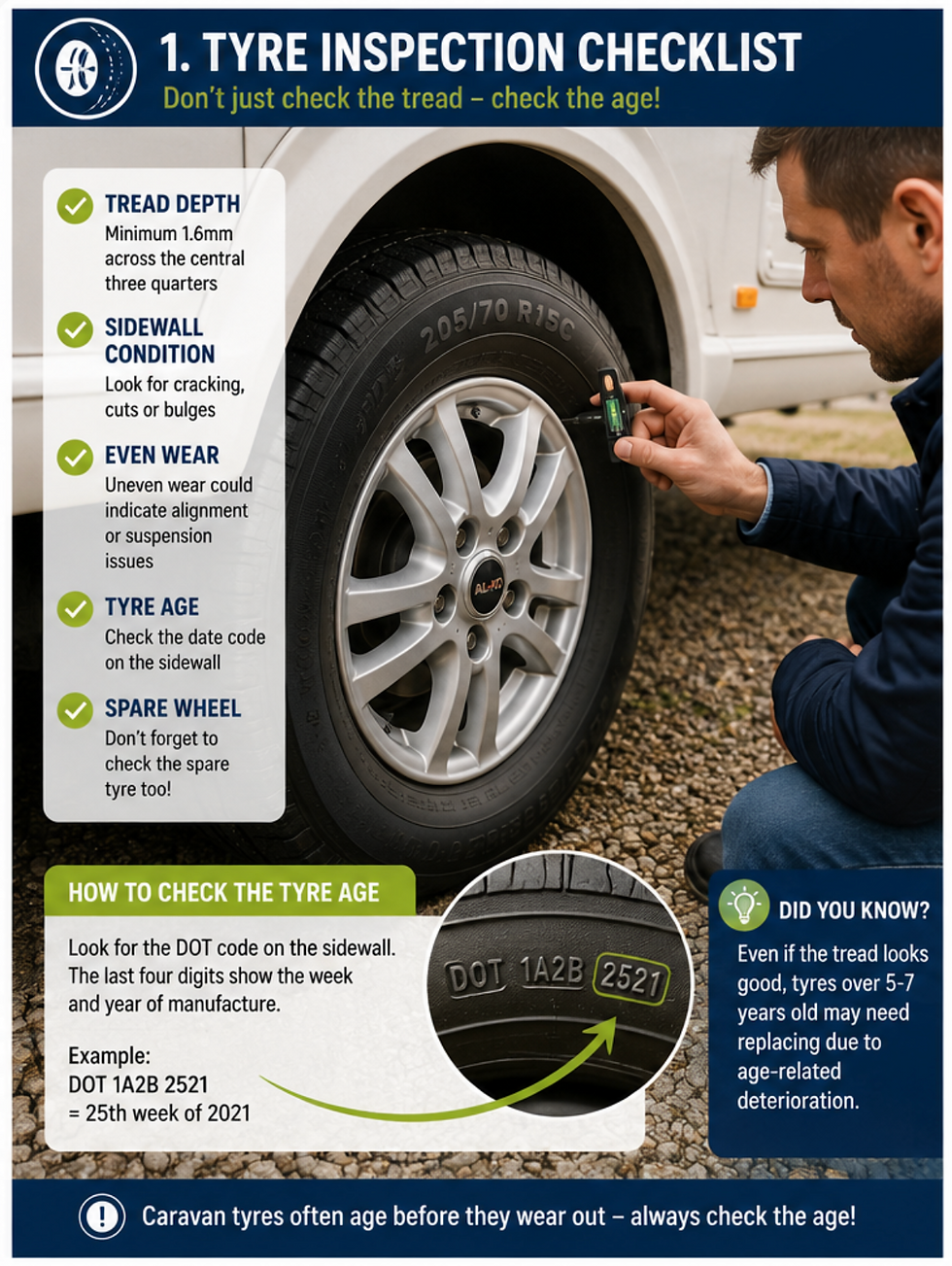
Caravan tyres often age before they wear out.
Even if the tread appears good, tyres over five to seven years old may need replacing.
Check:
Tread depth
Sidewall cracking
Uneven wear
Tyre age codes
A new set of caravan tyres can cost several hundred pounds, so this is worth factoring into negotiations. Not sure how to check the age of a caravan tyre? Read our guide on How to Check Caravan Tyre Age and When to Replace Them before viewing a used caravan.
7. Test All Appliances and Systems
Never buy a caravan without testing the main systems.
Check:
Fridge operation
Heating
Water heater
Water pump
Lights
Mains electrics
Battery charger
Gas appliances
Ask the seller to demonstrate everything working properly.
If possible, test appliances on both mains electric and gas operation. If you’re unsure how caravan electrics work, our 13-Pin Caravan Electrics Guide explains the towing electrical system in detail.
8. Verify the Paperwork
Always ensure the caravan’s paperwork matches the caravan itself.
Important documents include:
CRiS registration documents
Service history
User manuals
Appliance manuals
Keys for all locks
Verify the VIN number matches the documentation provided.
If paperwork is missing, proceed with caution.
9. Make Sure Your Tow Car Is Suitable
Before buying any caravan, confirm that your tow vehicle can safely tow it.
Check:
MTPLM (Maximum Technically Permissible Laden Mass)
Tow vehicle towing capacity
Nose weight limits
Caravan width and length
Many first-time buyers overlook towing compatibility and discover problems after purchase.
Understanding the weight relationship between your tow car and caravan is essential for safe towing. Before purchasing, check our guides on matching a car and caravan and understanding caravan nose weight.
10. Ask the Right Questions
The seller’s answers can reveal a lot about the caravan’s history.
Useful questions include:
Has the caravan ever suffered from damp?
Has it had any accident repairs?
Why are you selling it?
Has it been stored indoors or outdoors?
When were the tyres last replaced?
Are there any faults I should know about?
Has it been serviced annually?
An honest seller should be willing to answer these questions openly.
Used Caravan Viewing Checklist
Take this checklist with you when viewing a caravan:
Exterior
Roof condition
Windows and seals
Awning rail condition
Corner panels
Locker doors
Chassis condition
Interior
Damp signs
Floor firmness
Cupboard condition
Appliance operation
Upholstery condition
Water system
Towing Equipment
Hitch condition
Stabiliser operation
Electrical plug
Breakaway cable
Jockey wheel
Paperwork
CRiS registration
Service records
Damp reports
Manuals
Spare keys
Common Mistakes When Buying a Used Caravan
Many buyers focus on appearance and forget the important checks.
Common mistakes include:
Not checking for damp
Ignoring tyre age
Failing to test appliances
Forgetting to check towing compatibility
Buying without service history
Rushing into a purchase
Taking your time can prevent expensive surprises later.
Final Thoughts
A second-hand caravan can provide years of enjoyable holidays and excellent value for money, but it’s important to inspect carefully before buying.
Checking for damp, reviewing the service history, inspecting the chassis, testing appliances, and confirming the paperwork are all essential steps.
With a thorough inspection and a little patience, you can find a caravan that offers reliable touring and great memories for years to come.
FAQs
Is it worth buying a second-hand caravan?
Yes. A used caravan can offer excellent value for money, especially if it has been well maintained and serviced regularly.
What is the biggest problem to look for in a used caravan?
Damp is often the most serious and expensive issue. Always inspect carefully and request damp reports where available.
How old is too old for a used caravan?
Age alone is not a problem. Condition, service history, and maintenance are often far more important than the caravan’s age.
Should I buy a caravan without service history?
It is possible, but you should proceed carefully and budget for a professional inspection before purchase.
How much should I negotiate on a used caravan?
This depends on condition and market demand. Issues such as tyre replacement, missing service history, or appliance faults can provide opportunities for negotiation.


Comments